In this article 13 sections
- Practical Ways to Improve Focus and Productivity
- 1. Decide What Matters Before You Start
- 2. Work in Short, Focused Blocks
- 3. Use Time Blocking
- 4. Put Your Phone Out of Reach
- 5. Do One Thing at a Time
- 6. Set Up Your Space for Focus
- 7. Take Real Breaks
- 8. Look After the Basics
- 9. Start with the Hardest Task, or the Easiest
- 10. End Your Day with a Quick Review
- Frequently Asked Questions
- The Bottom Line
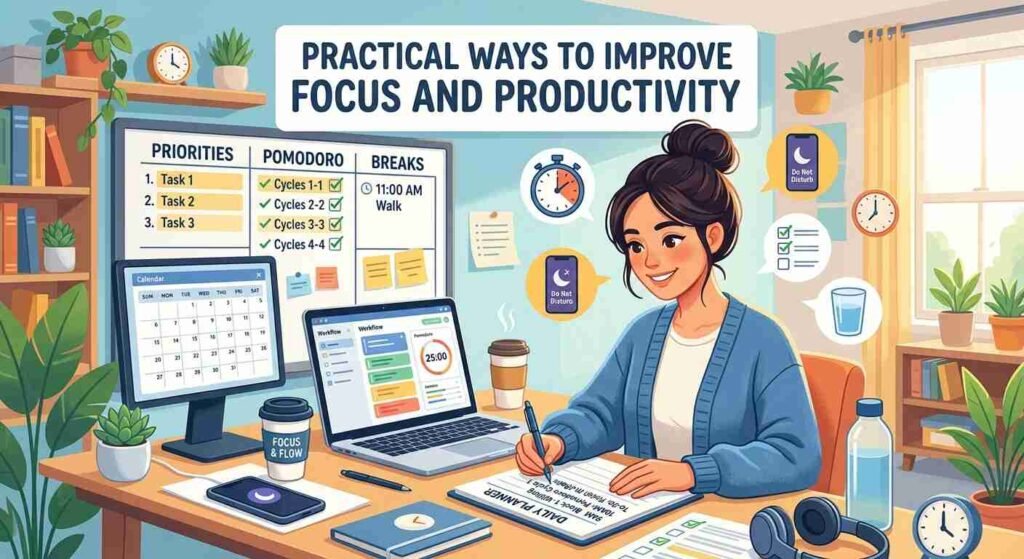
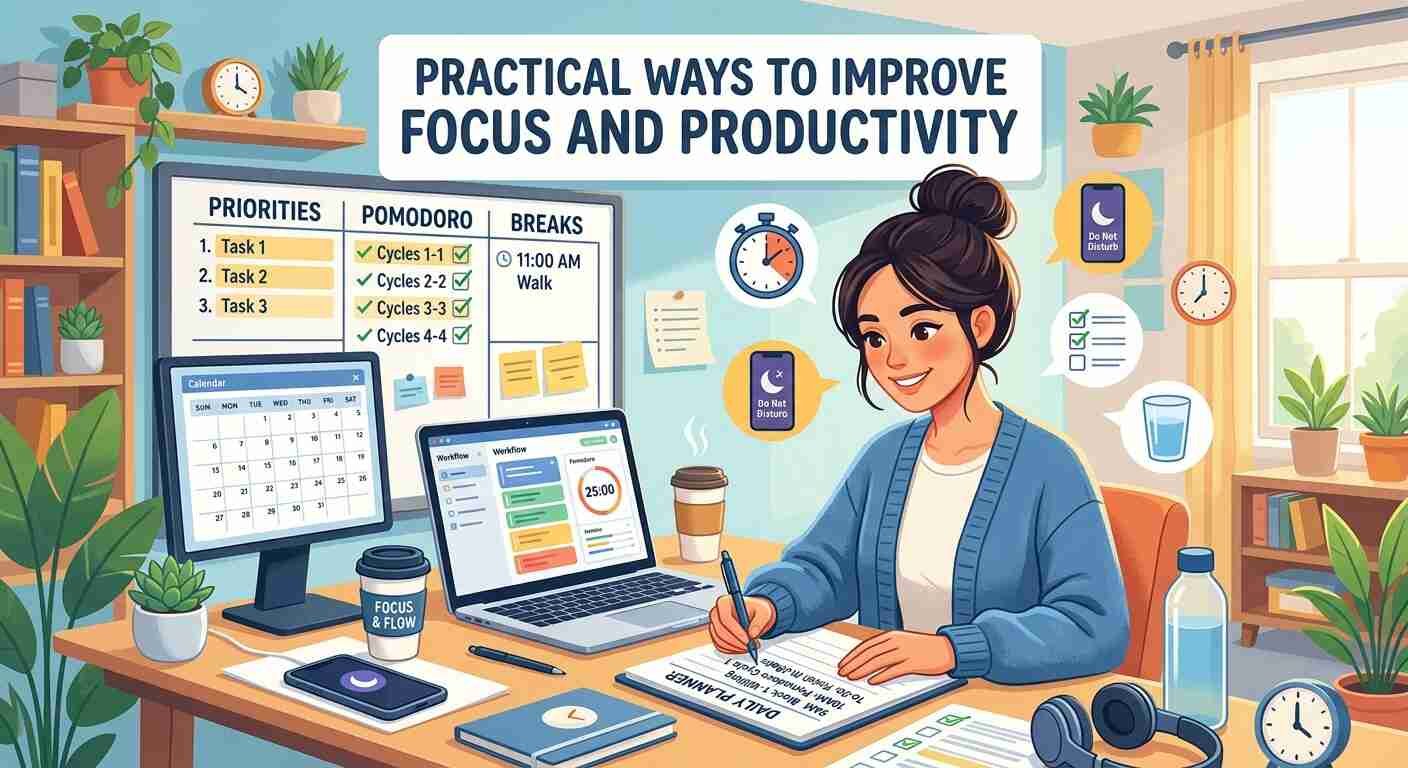
Practical Ways to Improve Focus and Productivity
You sit down to do one important thing. Twenty minutes later you’ve answered three messages, checked the news, refilled your water, and still haven’t started.
If that sounds familiar, you’re not lazy. Focus is hard in a world built to interrupt you. The good news is that it’s also a skill you can improve with a few small changes. Here are practical ways to improve focus and productivity that don’t require a new app, a new personality, or a perfect morning routine.
Why It’s So Hard to Focus Right Now
Our attention gets pulled in a hundred directions all day: notifications, email, open tabs, group chats. Researchers who study attention, including Gloria Mark at the University of California, Irvine, have found that interruptions don’t just cost the seconds they take. It can take a surprisingly long time to get your head back into the task afterward, often cited as over twenty minutes.
In other words, every “quick check” costs more than it feel like. That’s why most good focus advice comes down to one idea: protect your attention before you try to spend it.
1. Decide What Matters Before You Start
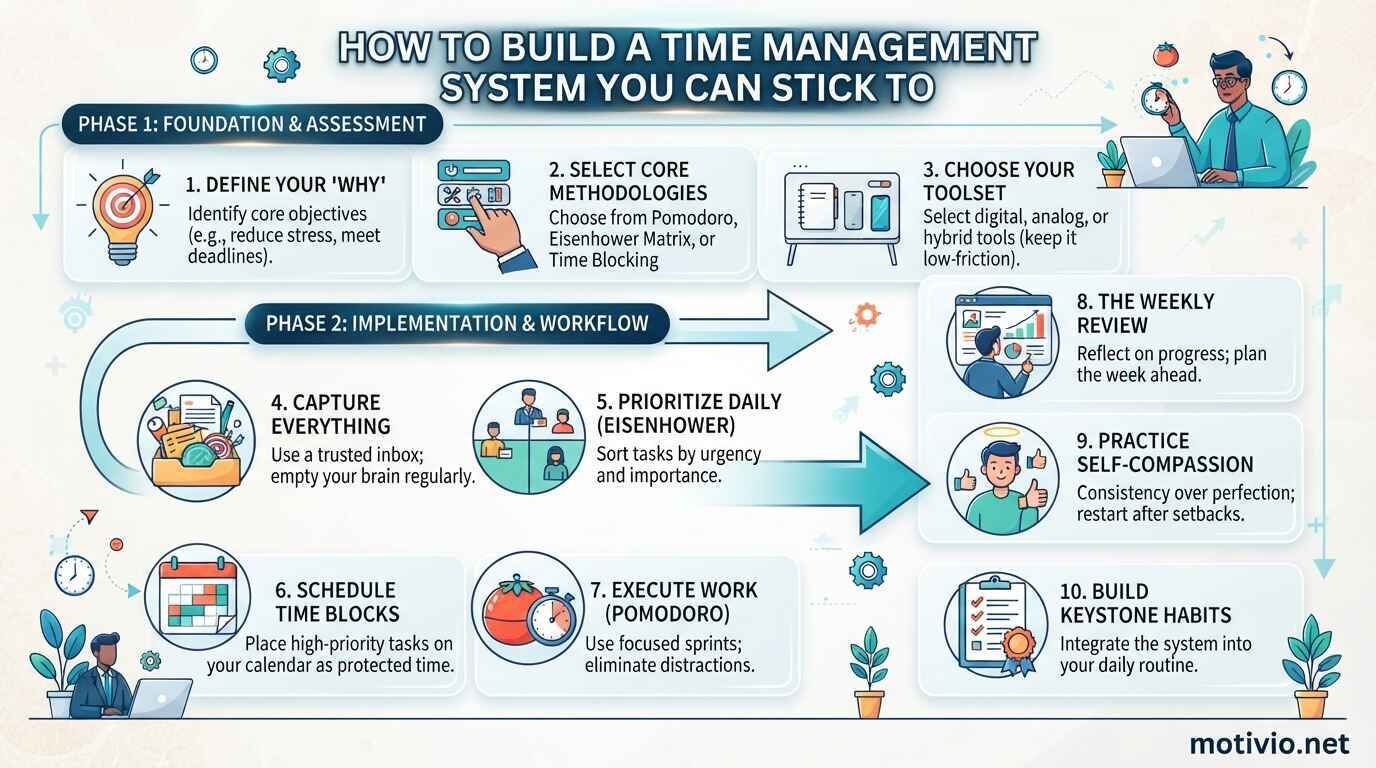
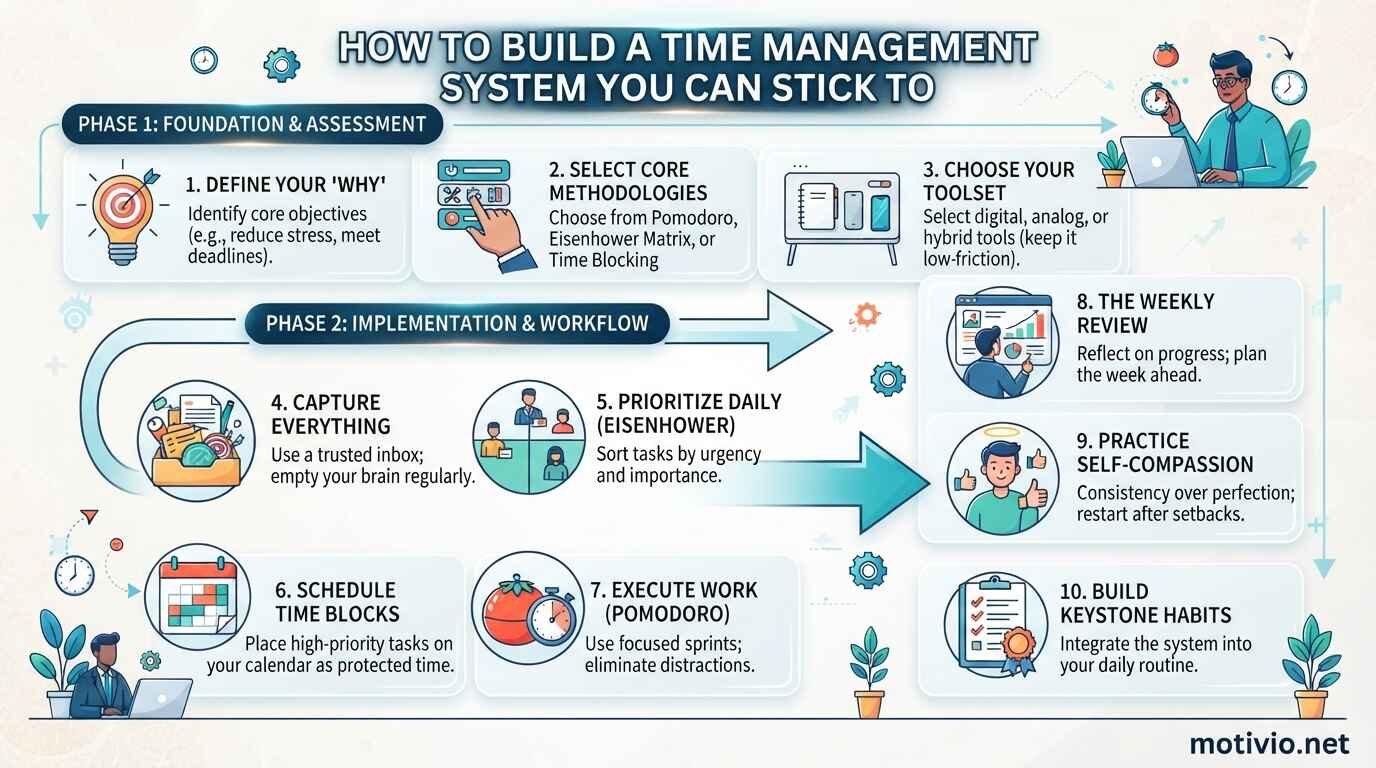
Before you open your laptop, write down the one to three things that would make today a win. Not twenty tasks. Just the ones that matter most.
A long to-do list feels productive but often hides the important work under a pile of small stuff. Picking your top priorities first means your best energy goes to the right place.
2. Work in Short, Focused Blocks
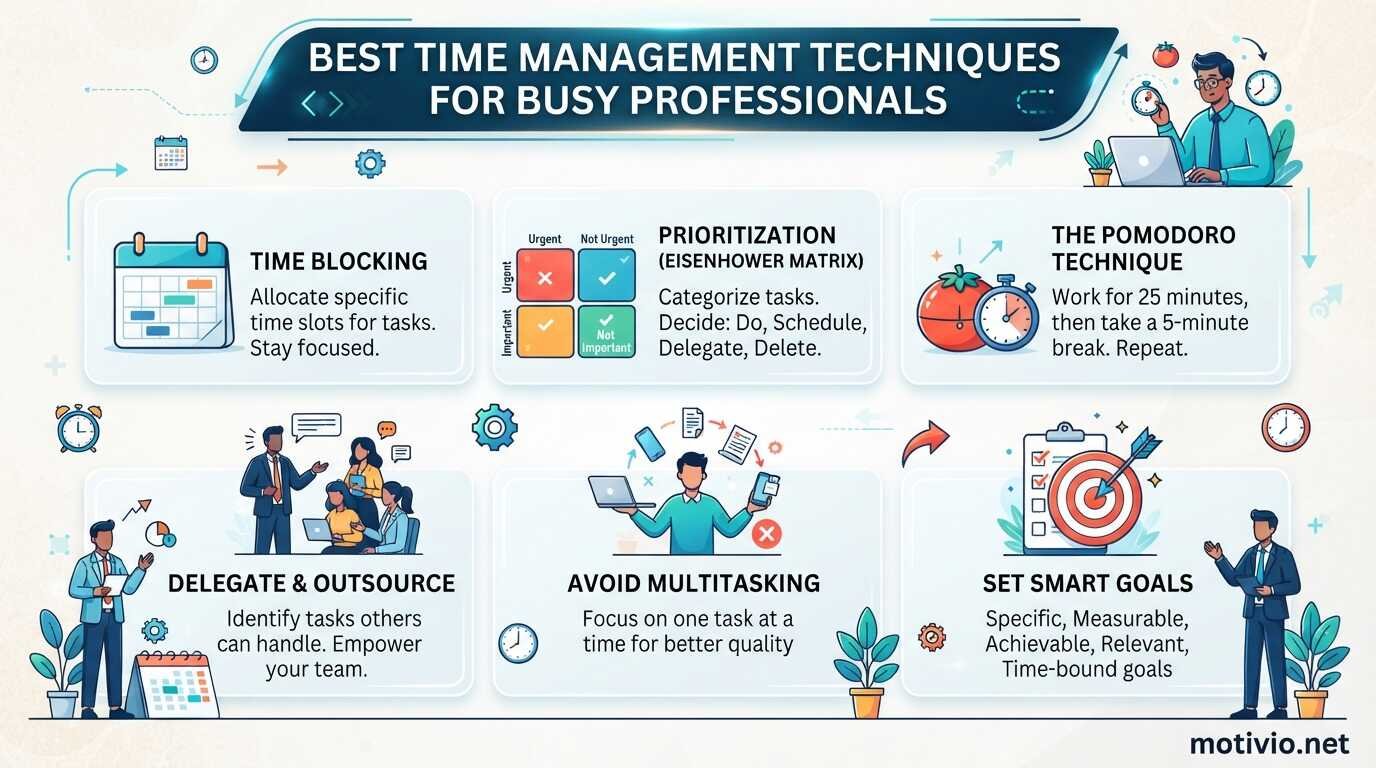
The Pomodoro Technique is popular for a reason. You work for 25 minutes with no distractions, then take a 5-minute break. After four rounds, take a longer break of 15 to 30 minutes.
The trick is that 25 minutes feels doable, even when the task feels heavy. Starting is usually the hardest part, and a timer makes starting easier. If 25 minutes doesn’t suit you, try 40 or 50. Experiment until it fits.
3. Use Time Blocking
Instead of working through a vague list, give your tasks a place on your calendar. Block out 90 minutes for writing, an hour for emails, 30 minutes for admin. When a task has a time slot, you stop deciding what to do next and just do it.
Try to schedule your hardest work when your energy is highest. For many people that’s the morning, but not everyone. Notice when you feel sharpest and protect that window.
4. Put Your Phone Out of Reach
This one sounds too simple, but it works. Having your phone on your desk, even face down, makes it easy to reach for. Put it in another room, a drawer, or at least on silent and out of sight while you do focused work.
If you need it for calls, turn off all notifications except the few that truly matter.
5. Do One Thing at a Time
Multitasking feels efficient, but what you’re really doing is switching quickly between tasks, and each switch costs you focus and time. Pick one task, finish it or reach a clear stopping point, and then move on.
If a random thought pops up while you’re working, keep a notepad nearby and jot it down. You can deal with it later without breaking your flow.
6. Set Up Your Space for Focus
Your environment quietly shapes your behavior. A few small tweaks go a long way:
- Clear your desk of anything you don’t need for the task
- Close extra browser tabs and apps
- Use headphones or background noise if silence distracts you
- Keep water and a snack within reach so you don’t wander off
7. Take Real Breaks
Pushing through exhaustion rarely makes you more productive. Short breaks help your brain recover, and the best ones don’t involve a screen. Stand up, stretch, walk around the block, look out a window, or get some fresh air.
Scrolling social media on your break might feel restful, but it keeps your brain busy, and you often return more scattered than before.
8. Look After the Basics
No focus hack beats the basics. If you’re short on sleep, not eating well, or sitting all day, your concentration will suffer no matter what technique you try.
- Sleep: Most adults do best with seven to nine hours.
- Movement: Even a 10-minute walk can help clear your head.
- Food and water: Skipping meals or getting dehydrated can make it hard to concentrate.
9. Start with the Hardest Task, or the Easiest
There are two schools of thought. Some people like to “eat the frog” and do the hardest task first, so it’s out of the way. Others build momentum by finishing a quick win first. Neither is right for everyone. Try both for a week and see which leaves you feeling better.
10. End Your Day with a Quick Review
Spend five minutes at the end of the day looking at what you finished and what’s next. Write tomorrow’s top priorities before you shut down. You’ll start the next morning with a clear plan instead of a blank screen, and you’ll switch off work more easily in the evening.
Common Mistakes That Hurt Your Focus
- Trying to change everything at once. Pick two or three tips and stick with them for a couple of weeks.
- Aiming for perfection. You will get distracted sometimes. What matters is how quickly you come back.
- Ignoring your energy. Productivity isn’t just about time. It’s about when and how you use your energy.
- Relying on willpower alone. It’s easier to remove distractions than to resist them all day.
Frequently Asked Questions
How can I improve my focus quickly?
Put your phone out of sight, close extra tabs, and set a 25-minute timer for one task. This simple combination helps many people concentrate within minutes.
What is the best technique to increase productivity?
There’s no single best method. The Pomodoro Technique, time blocking, and focusing on one priority at a time are all popular and easy to try. Pick the one that matches how you work.
Why do I lose focus so easily?
Common causes include lack of sleep, stress, constant notifications, and an overloaded to-do list. If you’ve had ongoing trouble concentrating, it may be worth talking to a doctor, since several health conditions can affect focus.
How long can a person stay focused?
It varies, but many people can focus deeply for somewhere between 25 and 90 minutes before needing a break.
Do productivity apps help?
They can, but only if they make your life simpler. A plain notebook and a timer work for plenty of people.
The Bottom Line
You don’t need to overhaul your life to focus better. Start small. Choose your priorities, silence the distractions, work in focused blocks, and rest properly. Do that consistently and the results add up faster than you’d expect.
Pick one tip from this list and try it today. Tomorrow, add another.