In this article 14 sections
- How to Build Better Spending Habits on Less Income
- 1. Know Exactly Where Your Money Goes
- 2. Build a Budget That Fits Your Actual Situation
- 3. Distinguish Between Needs and Wants
- 4. Prepare Your Shopping Ahead of Time
- 5. Develop a Habit of Reflecting Before Buying
- 6. Save a Little Whenever You Can
- 7. Cut Down on Expenses That Aren’t Worth It
- 8. Get Ready for Unplanned Expenses
- 9. Stop Comparing Your Spending with Others
- 10. Check Your Budget Monthly
- Common Spending Errors to Avoid
- Frequently Asked Questions
- Conclusion
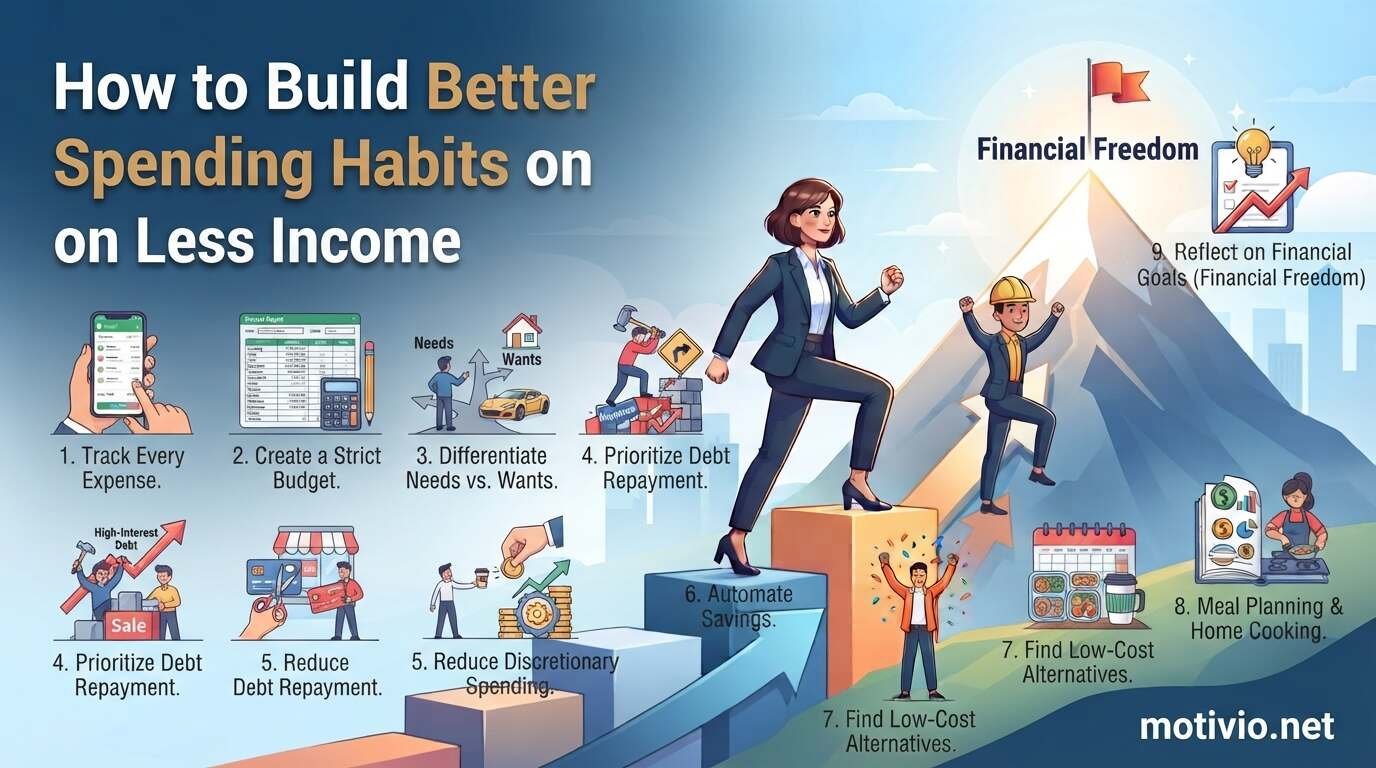
How to Build Better Spending Habits on Less Income
Handling finances on a tight budget can be tough. When a large part of your income is spent on rent, groceries, travel, bills, and looking after family, saving money might feel nearly impossible.
You might create a detailed budget for the month, but surprise expenses can come up and throw it off track. Even minor purchases can accumulate, leaving you with less cash than you planned.
Yet, developing smarter spending habits doesn’t mean you have to give up every fun activity or stick to an unachievable budget.
It starts with recognizing where you stand financially, making thoughtful choices, and setting up habits that help you use your money wisely.
Why Understanding Your Spending Habits Is Important When Money Is Tight
Your income dictates the total amount of money you earn, while your spending habits determine how that money gets spent.
When your funds are limited, making financial choices might need more thoughtful consideration since there’s less flexibility to handle unplanned expenses.
Creating good financial habits can help you identify your spending trends, focus on key costs, and make smart decisions.
The Consumer Financial Protection Bureau highlights budgeting, saving, spending choices, and self-discipline as critical elements of financial skills.
However, it’s essential to realize that not all financial challenges stem from bad spending habits. If your necessary expenses are greater than your income, cutting back on minor purchases might not resolve the issue.
The aim is to make the most effective choices possible given your situation while exploring practical options to better your financial status.
1. Know Exactly Where Your Money Goes
The initial step towards better spending practices involves understanding how you currently handle your finances.
Many individuals are aware of their monthly income but only have a vague sense of their spending across different categories.
Start documenting your expenses for at least two to four weeks.
Note purchases such as:
• Groceries and household items.
• Transport and fuel.
• Utility payments.
• Phone and internet bills.
• Meals out and snacks.
• Clothes and personal items.
• Subscriptions and online services.
You can jot this down in a notebook, on a spreadsheet, or with a budgeting app.
Once the tracking period is over, take a look at your spending.
Focus on trends rather than evaluating single purchases. You might find that transport costs are higher than anticipated, that multiple subscriptions are hardly used, or that frequent small buys add up to more than you thought.
This information provides you with a practical foundation to enhance your budget.
2. Build a Budget That Fits Your Actual Situation
An effective budget should be created based on your real income and necessary expenses.
Start by calculating how much money you expect to receive every month. If your earnings fluctuate, use a cautious estimate instead of assuming every month will be exceptionally good.
Then, write down your essential expenses:
• Housing costs.
• Food expenses.
• Utilities.
• Transport costs.
• Medical and necessary personal expenses.
• Responsibilities to your family.
• Required payments on loans.
After that, identify expenses that can be adjusted as well as a reasonable amount to set aside for savings.
For instance, someone with a restricted income may have to prioritize rent, food, transport, and family needs before aiming to save.
Avoid following a budgeting guideline just because it’s trendy online. Your budget should suit your personal situation.
A practical budget is one that aids your decision-making rather than one that makes you feel bad about unavoidable costs.
3. Distinguish Between Needs and Wants
One of the most beneficial spending habits is learning to tell apart essential purchases from optional ones.
Needs usually encompass items necessary for basic living, work, health, and significant responsibilities.
Wants, on the other hand, are purchases that may enhance comfort or pleasure but aren’t urgently required.
For Example
| Expense | Possible classification |
| Basic groceries | Need |
| Essential transportation | Need |
| Required medication | Need |
| Premium entertainment subscription | Want |
| Upgrading a working phone | Usually a want |
| Eating at a restaurant | Usually a want |
The way things are categorized is based on your situation. For instance, a phone might be crucial for your job, schooling, or safety.
The aim is not to take away all desires. It’s about figuring out which expenses should be prioritized when funds are tight.
4. Prepare Your Shopping Ahead of Time
Going shopping without a plan can lead to buying things that aren’t needed.
Before you head to a grocery store or do online shopping, jot down what you really need.
When it comes to groceries, think about planning a few meals using what you already have.
A sensible shopping routine consists of:
1. Looking in your cabinets and fridge.
2. Creating a list of necessary items.
3. Deciding on a budget.
4. Checking prices and amounts.
5. Avoiding the urge to buy things just because they’re on sale.
Be cautious with bulk buys. Getting a lot of one item might lower the cost per unit, but it’s not helpful if it spoils, goes unused, or takes away money meant for something more vital.
A discount is beneficial only when the purchase meets your needs and fits your budget.
5. Develop a Habit of Reflecting Before Buying
Spontaneous buying can make it hard to follow a budget.
You might grab something because it looks nice, a sale creates pressure, or you are seeking a quick emotional lift.
Before buying something that isn’t necessary, take a moment to think:
• Do I really need this now?
• Can I afford this without stress?
• Does this fit in my budget?
• Would I prefer to use this money for something else?
For more significant purchases, think about waiting a day or two before making a decision.
You can also delete saved payment information from shopping sites, opt out of promotional emails, or refrain from browsing shopping apps when you’re not in the mood to buy.
These small adjustments can help you spend with purpose.
6. Save a Little Whenever You Can
Saving money can seem tough when your income is low, especially since necessary bills take up most of your earnings.
Rather than aiming for an impossible goal, begin with an amount that suits your situation.
For instance, you could put aside a little money from each paycheck or save a portion of your income whenever it’s possible.
If regular saving isn’t manageable, think about whether you can set aside money occasionally when an expense is lower than anticipated.
The goal is to create a simple routine without cutting back on essentials or missing important payments.
You can start with a small emergency savings target and gradually increase it as your financial situation improves.
Research examined by the CFPB talks about various methods to encourage emergency savings, including easy-to-access savings options and behavioral techniques.
7. Cut Down on Expenses That Aren’t Worth It
Cutting costs doesn’t mean you have to make your life hard.
Look for expenses that aren’t giving you enough benefit for the money you spend.
For instance, you might:
• End subscriptions you hardly use.
• Look into different mobile and internet plans.
• Cook at home more often.
• Minimize delivery fees you can avoid.
• Fix things that are useful instead of replacing them right away.
• Compare prices before buying things regularly.
Carefully check your recurring payments. Even small monthly fees can add up over time.
However, don’t cancel important services or necessary insurance just to save a little cash without knowing the consequences.
Focus on changes that are practical and can be kept up over time.
8. Get Ready for Unplanned Expenses
A budget may seem balanced until an unexpected cost comes up.
These can include car repairs, school fees, yearly charges, home upkeep, or unexpected medical bills.
Whenever you can, make a different section for unpredictable expenses.
If you know an expense is probably going to happen, figure out how much it might cost and break it into smaller amounts to save each month until it’s due.
For example, if you expect to pay a yearly fee, putting aside a little each month can help you manage the final payment.
For expenses that are truly unexpected, slowly building up an emergency fund can offer some financial security.
If your income is too low to cover basic needs and save, focus first on what you need right away and look for help or ways to increase your income.
9. Stop Comparing Your Spending with Others
Social media can pressure you to spend on clothes, gadgets, dining out, traveling, and other lifestyle expenses.
It’s easy to compare your finances with someone else’s without knowing their income, debts, savings, or responsibilities.
Their choices may not be practical for your situation.
Instead, determine what financial success looks like for you.
Maybe your goal is to pay bills on time, save a little for emergencies, cut down on debt, or put money aside for job training.
Track your progress based on your own goals rather than someone else’s way of living.
Feeling confident in your finances comes from knowing your options and making choices that suit your needs.
10. Check Your Budget Monthly
Your financial situation can change. Prices for food, transportation, home needs, and income can fluctuate each month.
Make it a habit to examine your budget at the end of every month.
Ask yourself:
1. Did I manage my essential costs?
2. Which spending areas went over my plan?
3. Were those costs necessary or could they have been avoided?
4. Did I save any money?
5. What can I change for next month?
For example, if you consistently go over your grocery budget, consider changing your meal prep or revising your spending estimates.
If your essential expenses continually go over your income, understand that it isn’t just a budgeting failure. You may need to look for extra income, cheaper options, assistance programs, or professional advice.
A Realistic Budget with a Limited Income
Imagine someone making 70,000 USD each month after taxes.
Their budget might look like this:
| Category | Example monthly amount |
| Household contribution | $ 25,000 |
| Food and groceries | $ 12,000 |
| Transportation | $ 6,000 |
| Utilities and phone | $ 5,000 |
| Personal expenses | $ 7,000 |
| Savings | $ 5,000 |
| Emergency or irregular expenses | $ 5,000 |
| Flexible balance | $ 5,000 |
| Total | $ 70,000 |
This serves as a sample illustration, not a suggested budget for every family. Actual costs in United states differ widely based on the city, living situation, size of the family, and personal obligations.
The key takeaway is that a budget has to represent actual expenses. If family costs or travel expenses are greater, the funds set for other areas may need to be adjusted.
A budget should never force someone to ignore basic needs just to hit a made-up savings goal.
Common Spending Errors to Avoid
Purchasing items just because they are on sale
A lower price does not mean that an item is worth buying.
Setting a savings goal that is too high
A goal that prevents you from covering your necessary bills is not realistic.
Forgetting about minor, regular costs
Subscriptions and consistent small expenses can slowly take away money that could be used in better ways.
Using credit without knowing about repayment costs
Borrowing money can add stress when the terms like interest, fees, and payback requirements are unclear.
Quitting after one tough month
Surprise expenses can occur. Assess your situation and restart your financial plan when you can.
Frequently Asked Questions
How can I enhance my spending habits on a tight budget?
Begin by keeping track of your spending, recognizing your necessary expenses, creating a realistic budget, and pausing before making unnecessary purchases. Focus on changes that align with your actual money situation.
What is the best method to limit unnecessary expenses?
Create a shopping list, establish money limits, reduce shopping alerts, and implement a waiting period prior to larger unnecessary purchases.
Should I save money even if my earnings are low?
If possible, set aside a small amount after covering essential needs and mandatory payments. If you have no money left, reevaluate your financial situation instead of trying to reach an unrealistic savings goal.
How can I avoid living paycheck to paycheck?
Start by analyzing your income and spending, identifying upcoming bills, creating a small financial cushion when you can, and looking for practical ways to increase income or cut unavoidable costs.
Can better spending habits lead to financial freedom?
Good spending practices can promote financial stability and long-term objectives, but achieving financial independence also relies on income, living expenses, debts, savings, and other factors.
Conclusion
Developing improved spending habits while on a limited income involves making smart choices rather than removing all joys from life.
By monitoring your spending, budgeting according to reality, planning purchases, avoiding needless debt, and saving when feasible, you can form a more structured relationship with your finances.
Keep in mind that financial growth varies for everyone. Your duties and chances may differ from those of others.
Begin with one achievable adjustment this week. Track your spending, create a shopping list, or evaluate your monthly costs.