In this article 13 sections
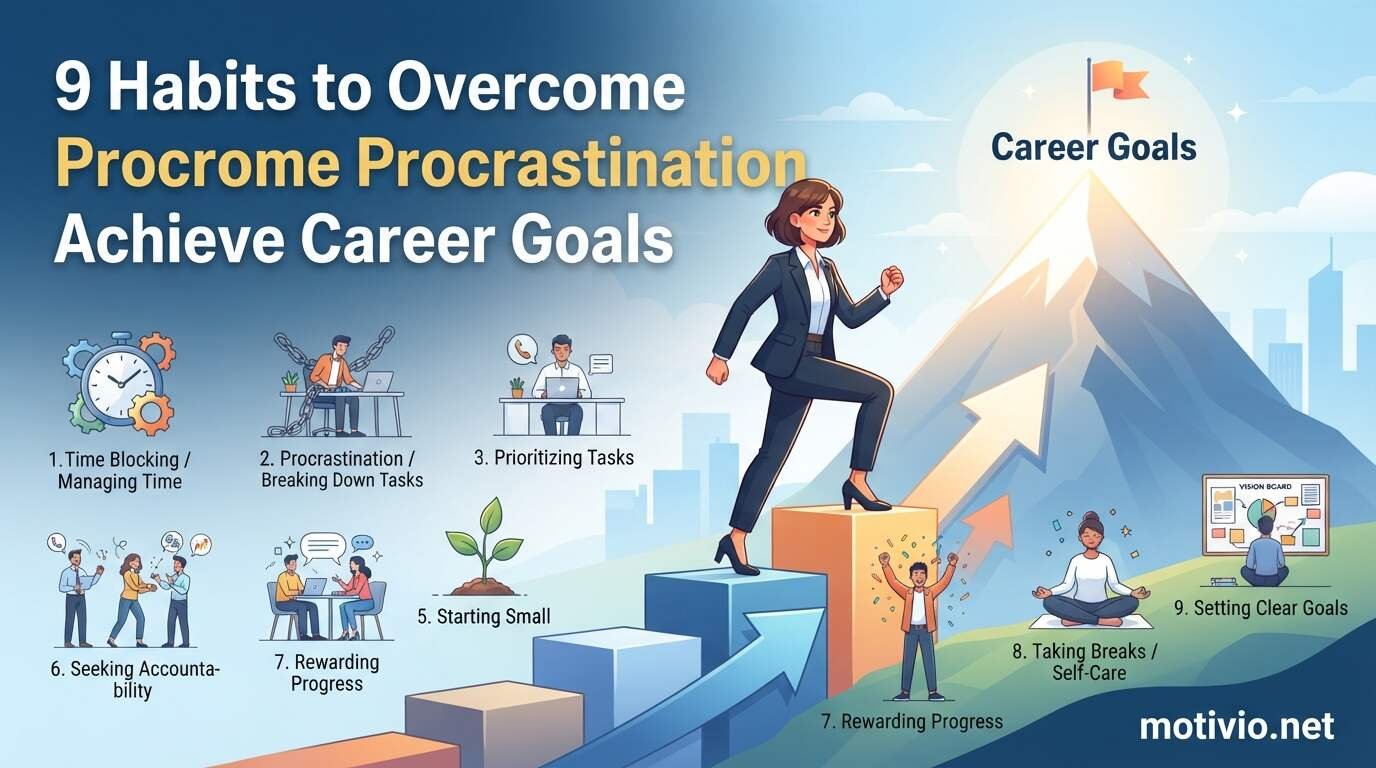
- 9 Habits to Overcome Procrastination and Achieve Career Goals
- 1. Begin with modest, doable steps
- 2. Use a Specific Start Time
- 3. Build a Daily Priority Habit
- 4. Remove Distractions Before Starting
- 5. Use Short, Focused Work Sessions
- 6. Replace Perfectionism With Progress
- 7. Track your Daily Progress
- 8. Create Accountability
- 9. Protect Your Energy and Review Your Routine
- Common Mistakes to Avoid
- Frequently Asked Questions
- Conclusion
9 Habits to Overcome Procrastination and Achieve Career Goals
Have you ever put off a crucial assignment even though you knew it would help you progress professionally? Maybe you put off applying for a new job, finishing a project, acquiring a useful skill, or updating your CV. You could have made a self-promise to start tomorrow, just to repeat the same routine the next day.
Procrastination is the term for this phenomenon. It entails putting off a planned job even when you are aware that doing so might lead to issues in the road. Professional growth, productivity, and the achievement of important objectives can all be hampered by procrastination.
The good news is that you don’t have to develop flawless discipline all at once. Small, useful habits that make it simpler to start projects, control distractions, and maintain consistency might help you start making progress.
In addition to useful tactics you may apply in your day-to-day work life, this article will examine nine habits to help you overcome procrastination and accomplish your goals.
Why Do We Put Off Work?
It’s not always the case that procrastination indicates a lack of motivation or laziness. When a task seems daunting, uncertain, unpleasant, or challenging, people may put it off. Low confidence, perfectionism, fear of failing, and distractions can all be factors.
An employee who wants to acquire a new professional skill, for instance, can keep putting off the first class because they are afraid they won’t be able to. A person who is getting ready for a promotion could put off asking their manager about prospects for growth since it would be awkward to do so.
A crucial first step is to recognize the causes behind your own procrastination. Instead of condemning yourself, figure out what makes the task challenging and come up with a workable solution.
1. Begin with modest, doable steps
Dividing big activities into smaller ones is one of the best strategies for conquering procrastination.
Focusing just on the end result might make a significant professional objective seem daunting. Considering the full course, test, and preparation procedure, for instance, may make it challenging to start if your objective is to obtain a professional certification.
Rather, choose the smallest beneficial task you can finish today.
You could:
- Read one page from your course materials.
- Watch a brief introductory video.
- Update a section of your resume.
- Investigate one job requirement.
- Write the first paragraph of a report.
These small actions help reduce the stress of starting something new.
They also help you understand what progress truly looks like.
2. Use a Specific Start Time
Many people make general promises like, “I will work on my career goals tomorrow.”
The issue is that “tomorrow” doesn’t give you a clear starting point.
You might keep putting off the task because you haven’t decided when or where to begin.
Replace vague plans with specific ones.
For example:
- Instead of “I will learn Excel,” write “I will practice Excel from 7:00 to 7:20 p.m.”
- Instead of “I will improve my resume,” write “I will update my professional summary after dinner.”
- Instead of “I will look for a better job,” write “I will review three job listings on Saturday morning.”
A helpful method is the if-then plan: “If it is 7 p.m.
and I have finished dinner, then I will study for 20 minutes.”
Research on implementation intentions shows how connecting a recognizable situation to a specific action can help people follow through on goals.
However, the effectiveness of a plan depends on the situation, and having a plan alone doesn’t ensure success.
3. Build a Daily Priority Habit
A long to-do list can make you feel productive while actually making it hard to decide what really matters.
Instead of treating all tasks as equally important, identify your main priorities.
At the start of each day, ask yourself:
1. What is the most important task I need to complete?
2. Which task will help me make real progress toward my career goals?
3. What can wait until later?
Choose one major task and a few smaller supporting tasks.
For example, if your career goal is to become a project manager, your main priority might be finishing a project management lesson.
Answering routine emails and organizing files can be secondary tasks.
This strategy helps you tell the difference between being busy and actually making progress.
4. Remove Distractions Before Starting
Your surroundings can either help or hinder your ability to focus.
Frequent notifications, social media, unnecessary browser tabs, and interruptions can constantly pull your attention away from important work.
Form the habit of preparing your environment before starting a task.
Try these steps:
- Turn your phone to silent or place it out of reach.
- Close browser tabs that are not relevant to your work.
- Keep the materials you need close at hand.
- Inform colleagues or family members when you need uninterrupted time.
- Use a website blocker if certain websites regularly distract you.
You don’t need a perfect office or expensive productivity tools.
Even a small, organized workspace can help you develop a more consistent starting routine.
The main aim is to make starting productive work easier and make distractions less convenient.
5. Use Short, Focused Work Sessions
Sometimes, procrastination happens because you expect yourself to concentrate for too long.
If a task feels overwhelming, try breaking it into smaller work sessions.
For example, you might:
- Work for 25 minutes.
- Take a five-minute break.
- Repeat the process if you have the time and energy.
This is one version of the Pomodoro-style approach.
The exact duration can vary—some people prefer shorter sessions, while others work for longer periods.
Use the session to focus on one specific activity instead of switching between unrelated tasks.
If you are studying for a certification, dedicate the session to one lesson or practice exercise.
If you are working on a report, focus on drafting one section.
Short sessions can make starting feel less demanding and give you a natural opportunity to review your progress.
6. Replace Perfectionism With Progress
Perfectionism can become an obstacle when you believe your work must be flawless before you begin.
You might delay submitting a proposal because you want every sentence to be perfect.
You may avoid applying for a job because you think your resume isn’t impressive enough.
Instead, separate the process of creating work from the process of improving it.
For example:
- Write a rough first draft before editing.
- Complete a practice exercise before judging your performance.
- Submit a reasonable application instead of endlessly revising it.
- Ask for feedback rather than trying to guess every possible criticism.
This does not mean you should ignore quality.
It means recognizing that improvement often starts with producing an initial version that can be reviewed and refined.
7. Track your Daily Progress
Tracking your progress can help you see whether your habits are supporting your career goals.
You don’t need a complicated productivity app.
A notebook, spreadsheet, calendar, or simple checklist can work.
Record actions you can control, such as:
- Minutes spent learning a professional skill.
- Job applications completed.
- Practice sessions finished.
- Networking messages sent.
- Important tasks completed.
Focus on consistency and useful effort rather than setting unrealistically high goals.
For example, if your goal is to improve your communication skills, you might track the number of practice presentations you complete each week.
Review your progress every Friday.
Ask what worked, what interrupted your routine, and what you can adjust.
8. Create Accountability
Career goals often become easier to maintain when someone else knows what you’re working on.
Accountability can come in different forms.
You might share a weekly learning objective with a coworker, join a professional group, or meet regularly with a mentor to discuss your progress.
The goal is not to create stress or embarrassment.
It is to build a supportive system that encourages you to take action.
For example, you could tell a friend:
“I plan to finish two lessons this week.
I’ll share what I learned on Sunday.”
You can also create personal accountability by setting up a recurring reminder to check on your goals.
Pick a method that feels supportive and realistic.
9. Protect Your Energy and Review Your Routine
Procrastination isn’t always a problem with time management.
Sometimes it’s because you’re tired, overwhelmed, or juggling too many tasks at once.
Develop habits that support steady effort.
These might include:
- Keeping a regular sleep schedule.
- Taking reasonable breaks during intense work.
- Making time for exercise and leisure.
- Setting limits on work hours.
- Checking your workload when deadlines become too tight.
If you keep putting off tasks at a certain time of day, consider whether that’s the best time for demanding work.
You might find it easier to study before work rather than late at night.
Alternatively, a short evening session may fit better into your schedule.
Regularly check your routine and adjust it based on your actual energy levels, responsibilities, and results.
How to Create a Simple Anti-Procrastination Routine
Here is an example of how you could combine these habits into a practical routine.
| Time | Action |
| Morning | Identify your most important career task |
| Before work | Prepare your workspace and remove distractions |
| Work session | Focus on one task for 25 minutes |
| Midday | Review progress and adjust priorities |
| Evening | Spend 15–20 minutes developing a professional skill |
| End of day | Record progress and choose tomorrows first action |
Common Mistakes to Avoid
Setting too many goals at once
Trying to improve all areas of your career at the same time can create unnecessary stress.
Start with one key goal and build a manageable routine.
Depending entirely on motivation
Motivation can change over time.
Build a system that helps you begin even when you don’t feel especially motivated.
Punishing yourself for missed days
Missing a session doesn’t erase what you’ve already achieved.
Identify what interrupted your routine and restart with a realistic next step.
Confusing activity with achievement
Reading productivity tips, organizing your workspace, and making detailed plans can become ways to avoid real work.
Make sure your routine includes actual progress toward your goal.
Frequently Asked Questions
What are the best habits to overcome procrastination?
Start with small actions, set clear priorities, choose specific start times, manage distractions, have focused work sessions, and regularly review your progress.
Choose a few habits that you can maintain rather than trying to adopt everything at once.
How can I stop procrastinating on career goals?
Break your career goal into smaller steps, schedule specific times to work on them, and track your progress.
If a task feels difficult, determine if you need more information, support, or a smaller starting point.
Can procrastination affect career growth?
Repeating delays in important tasks can limit your opportunities to develop skills, complete projects, and prepare for advancement.
The impact depends on your situation, responsibilities, and the tasks being delayed.
How long does it take to overcome procrastination?
There’s no set timeline.
The process depends on your behavior, environment, workload, and personal circumstances.Focus on practicing manageable habits consistently and adjusting them when needed.
Conclusion
Overcoming procrastination is not about being productive every minute of the day.
It’s about learning to take meaningful action even when a task feels tough or uncomfortable.
By starting small, setting clear priorities, managing distractions, tracking progress, and protecting your energy, you can develop habits that support your professional growth.
Choose one habit from this article and practice it today.
A small, consistent action can become an important part of your long-term career journey.